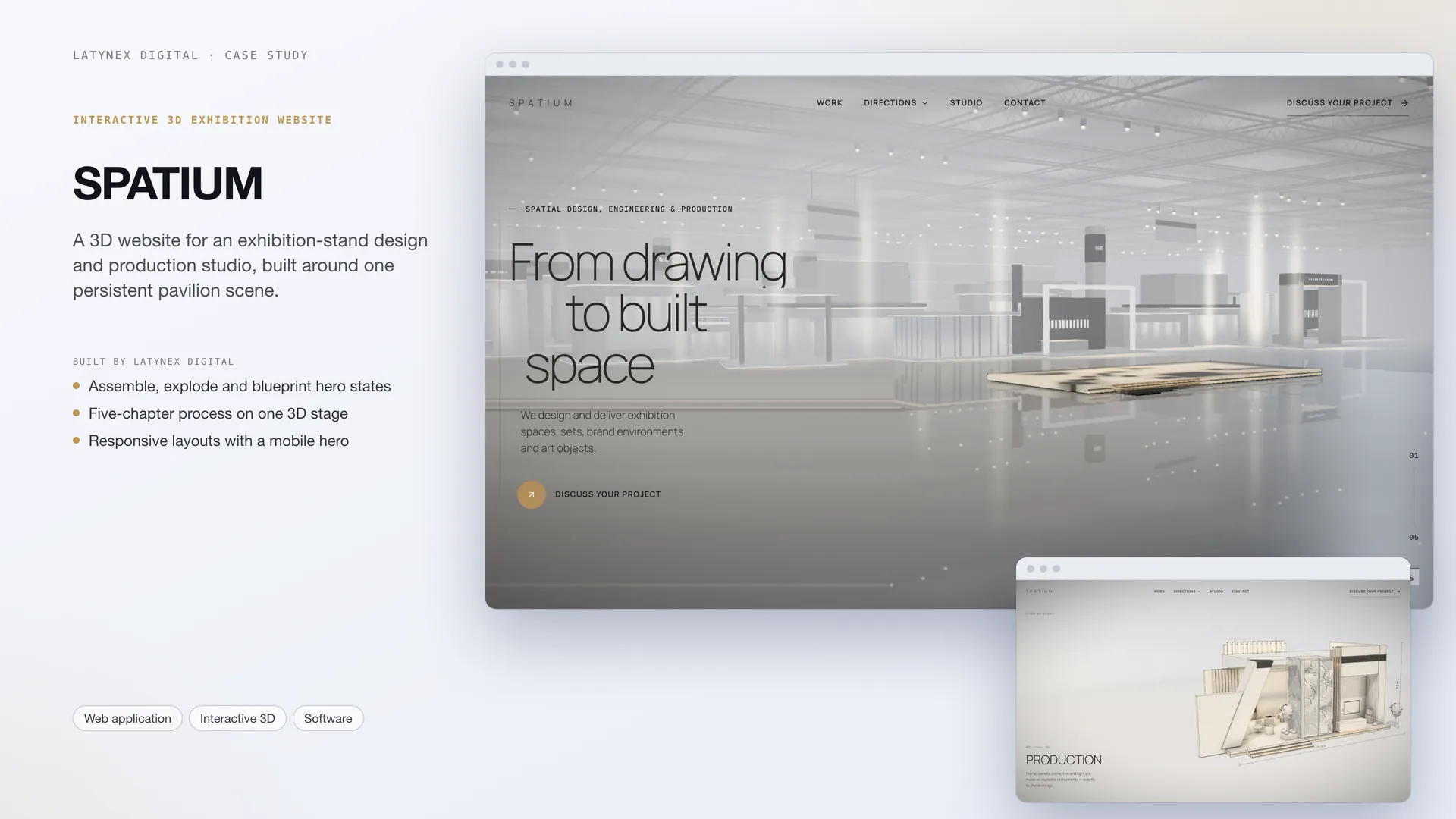
A stand-design studio sells spatial thinking, which flat templates cannot show. The site needed to demonstrate how an idea becomes a built space while staying fast and readable on phones.
Solution
What LATYNEX Digital built
A scroll-driven 3D narrative on one persistent stage, with restrained typography and layouts, localised host by host so that each language has its own address.
What it demonstrates
What this shows we can build
An interactive 3D marketing website: one persistent real-time WebGL scene with scroll-driven assemble, explode and blueprint states.
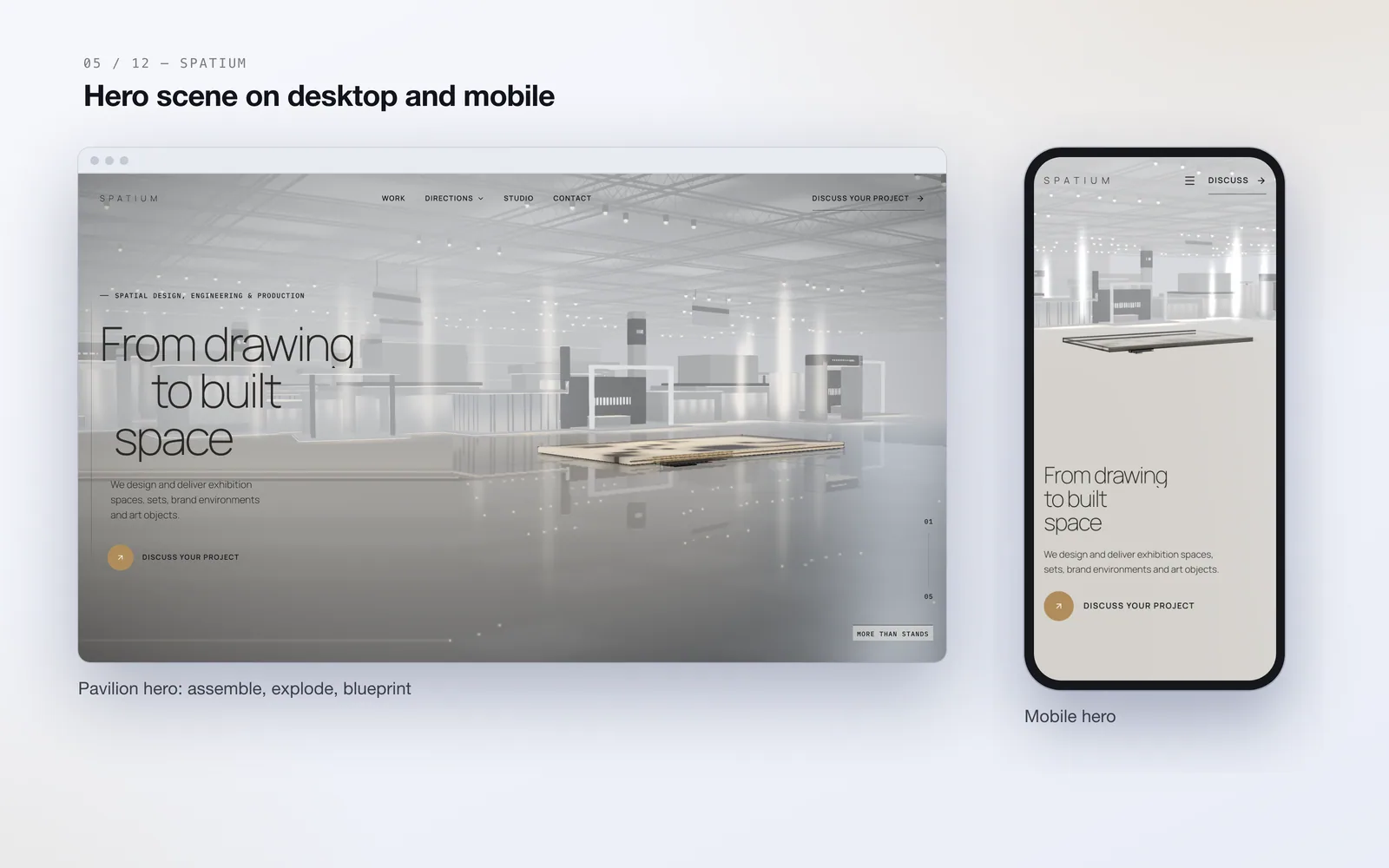
Built for phones as well as desktop: responsive layouts, a mobile hero and host-based locale routing on a single service.
How the same capability could serve another business
A studio, manufacturer or event business could show a product or a space in motion while keeping the site fast and readable on mobile.
Parity rule so translated pages never show more than the approved English site
Product showcase
The product, screen by screen
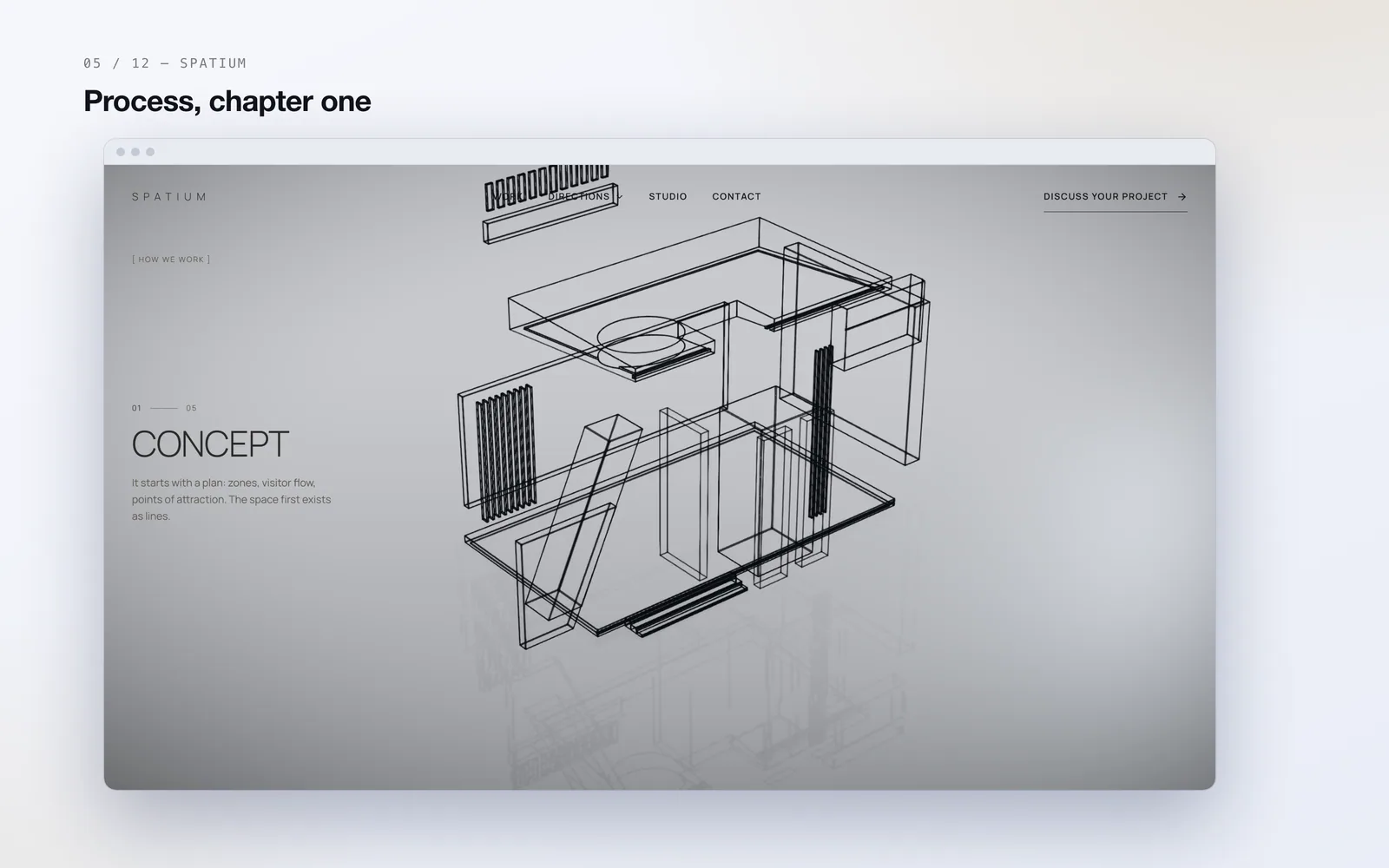
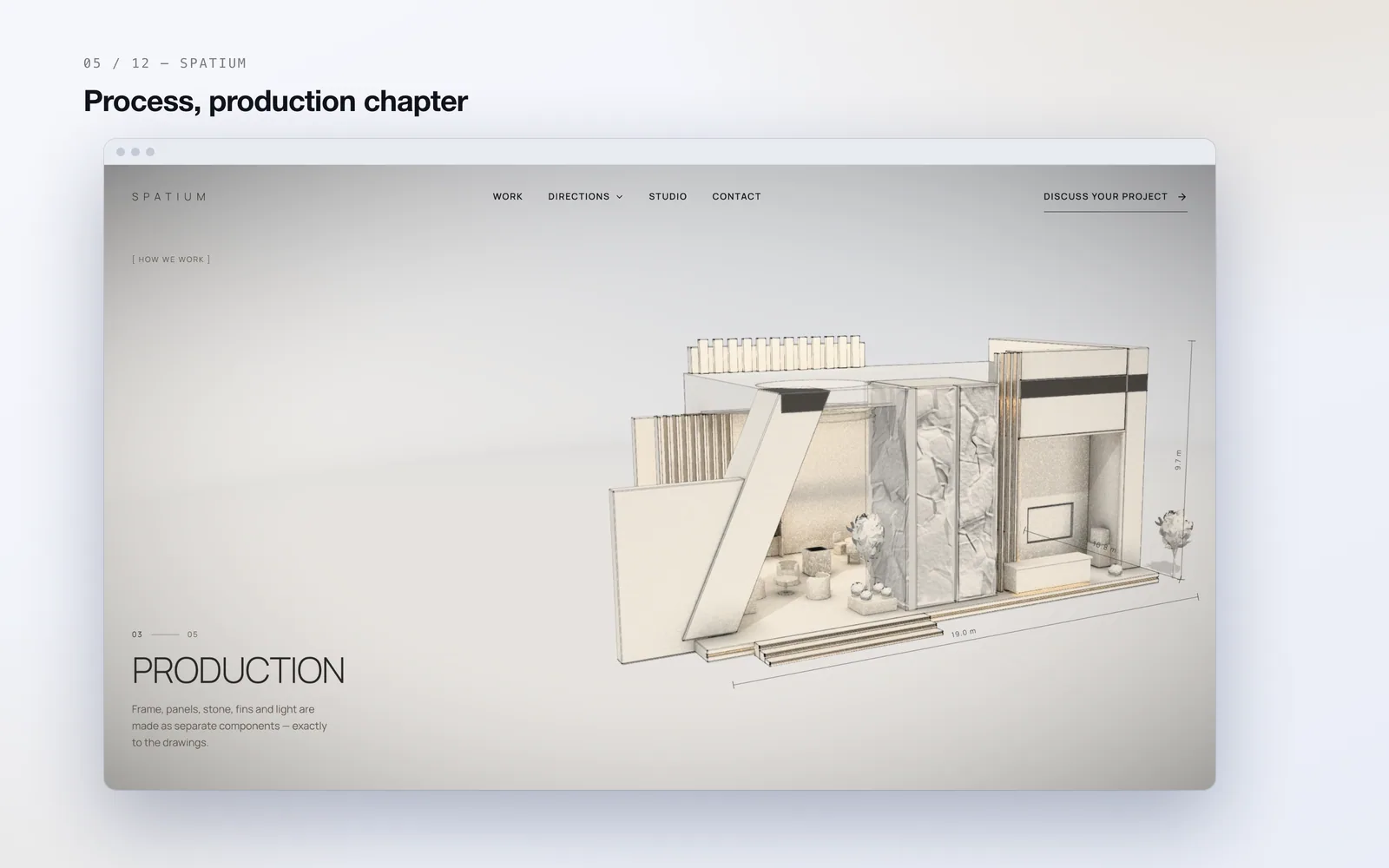
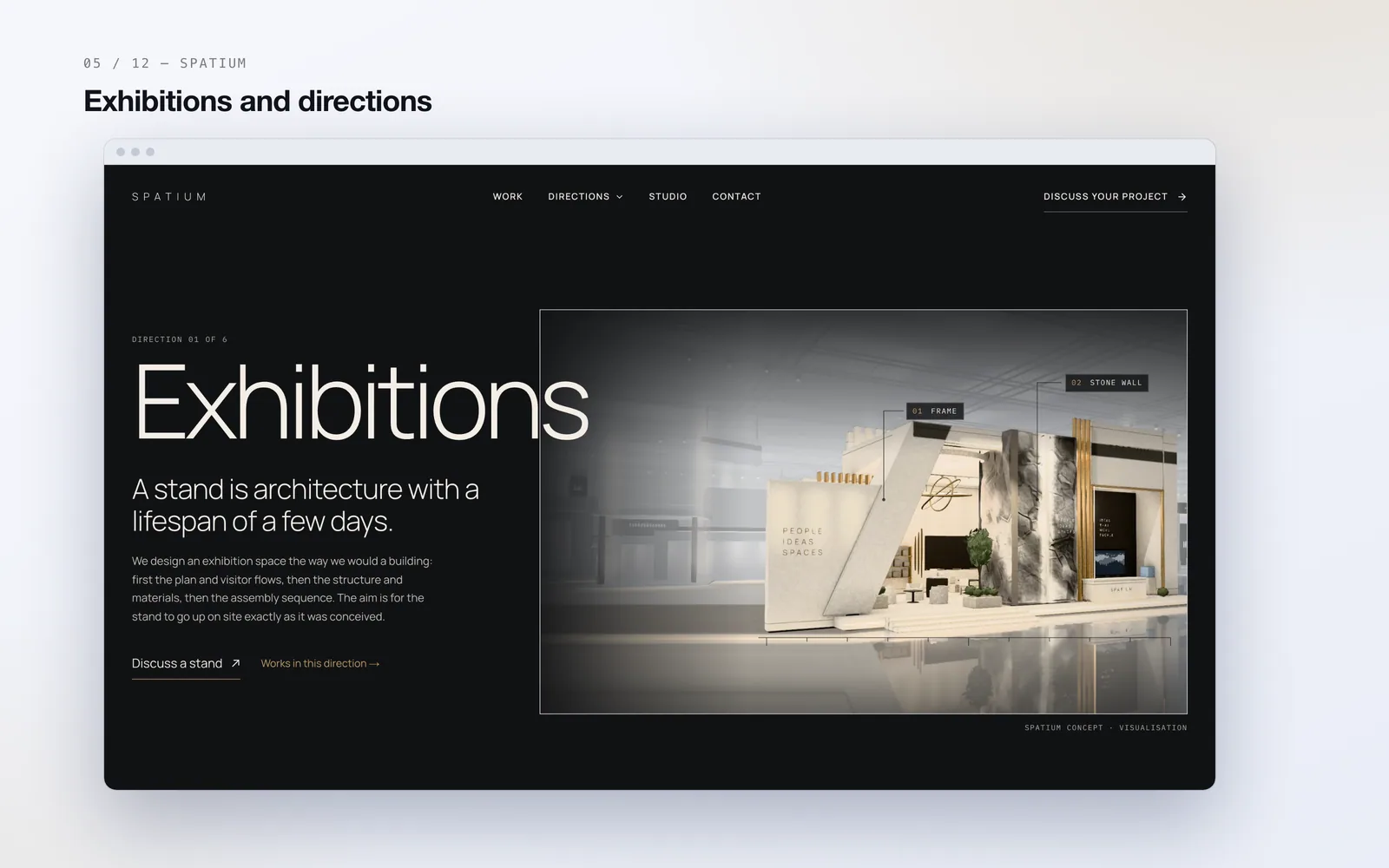
Pavilion hero: assemble, explode, blueprintProcess, chapter oneProcess, production chapterExhibitions and directions
Screens show the live review build of the site; the 3D scene is rendered in real time.
How it works
From input to outcome
01
One stage
A single real-time pavilion scene stays on screen instead of separate hero images.
02
A scroll-driven story
The hero assembles, explodes and turns into a blueprint, then continues into a five-chapter process.
03
Direction pages
Exhibitions, brand experiences and art installations are presented with rendered visualisations.
Technical approach
How it is engineered
Next.js 16 and React 19 with three.js and React Three Fiber for the 3D scene, styled with Tailwind CSS 4, served by a single Node service behind Caddy on LATYNEX infrastructure.
Next.js 16
React 19
three.js
React Three Fiber
Tailwind CSS 4
Caddy
Status and limits
What this page does and does not claim
The current deployment is a review build that search engines are asked not to index.
Only English-language screens are shown. No traffic, ranking or enquiry figures are claimed.
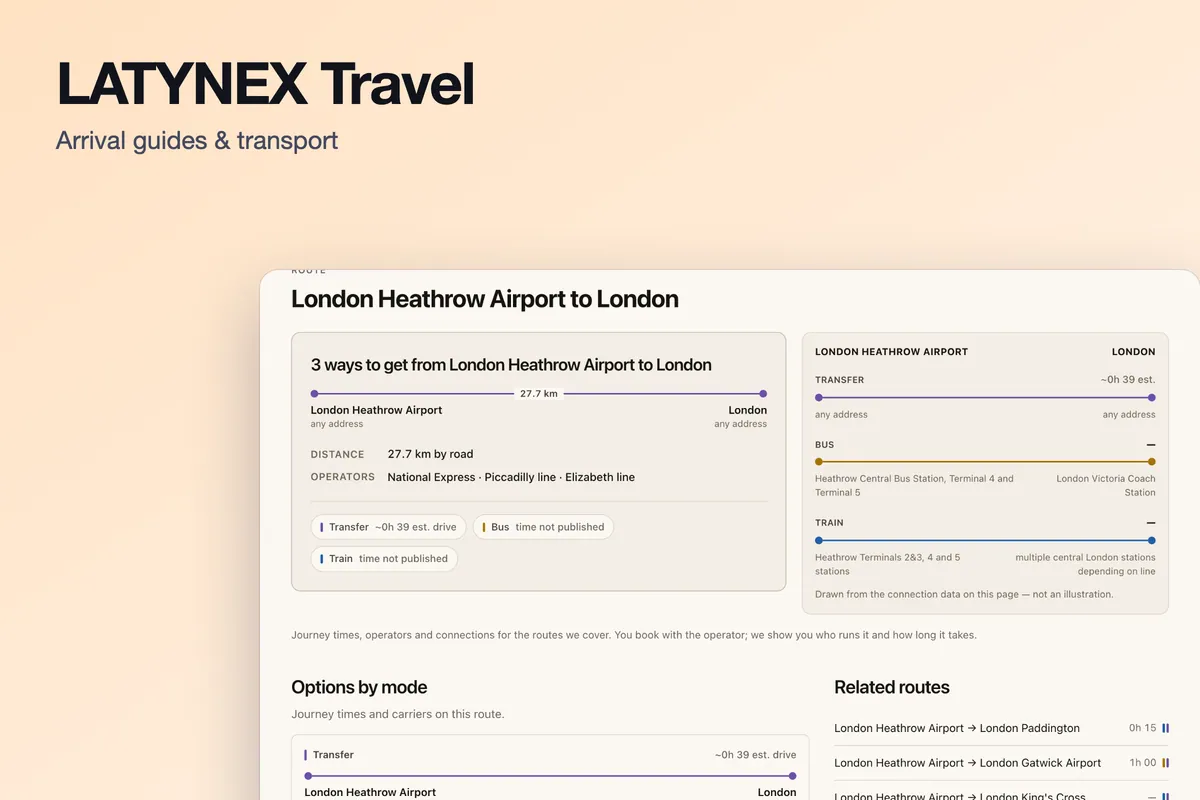
A content-led catalogue that shows how to get from airports, stations and ports into town, with published journey times, operators and passenger-rights guides.
Country, city and gateway hubs
Route pages comparing modes and operators
Passenger-rights and service guides with sources
In-house product — not external client workView case study →
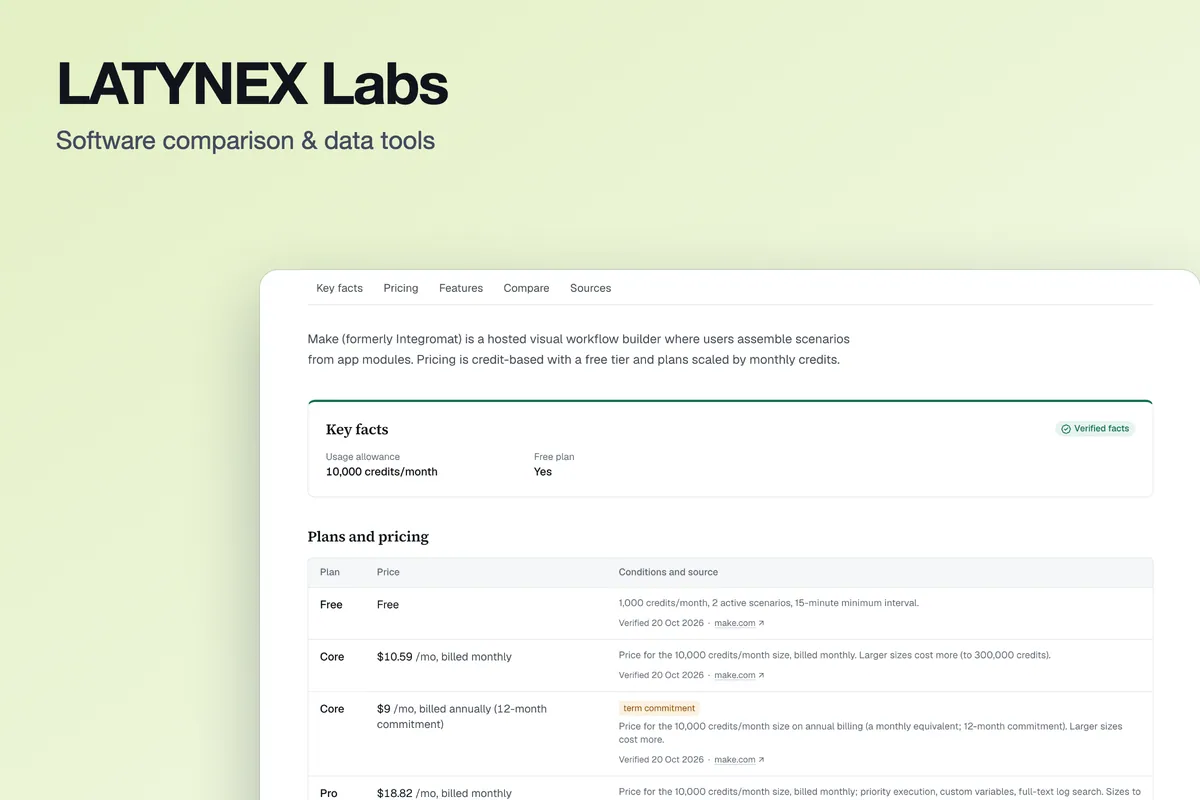
A public software comparison site and the internal publishing platform behind it, built so that every price and fact carries a source and a check date.
Public catalogue, filters, comparison and calculator
Fact verification with source provenance
Guide editor, scheduled checks and source register
In-house product — not external client workView case study →
Need something like SPATIUM?
Tell us what is not working today. You get a straight answer on what it would take, and whether we are the right team to do it.